
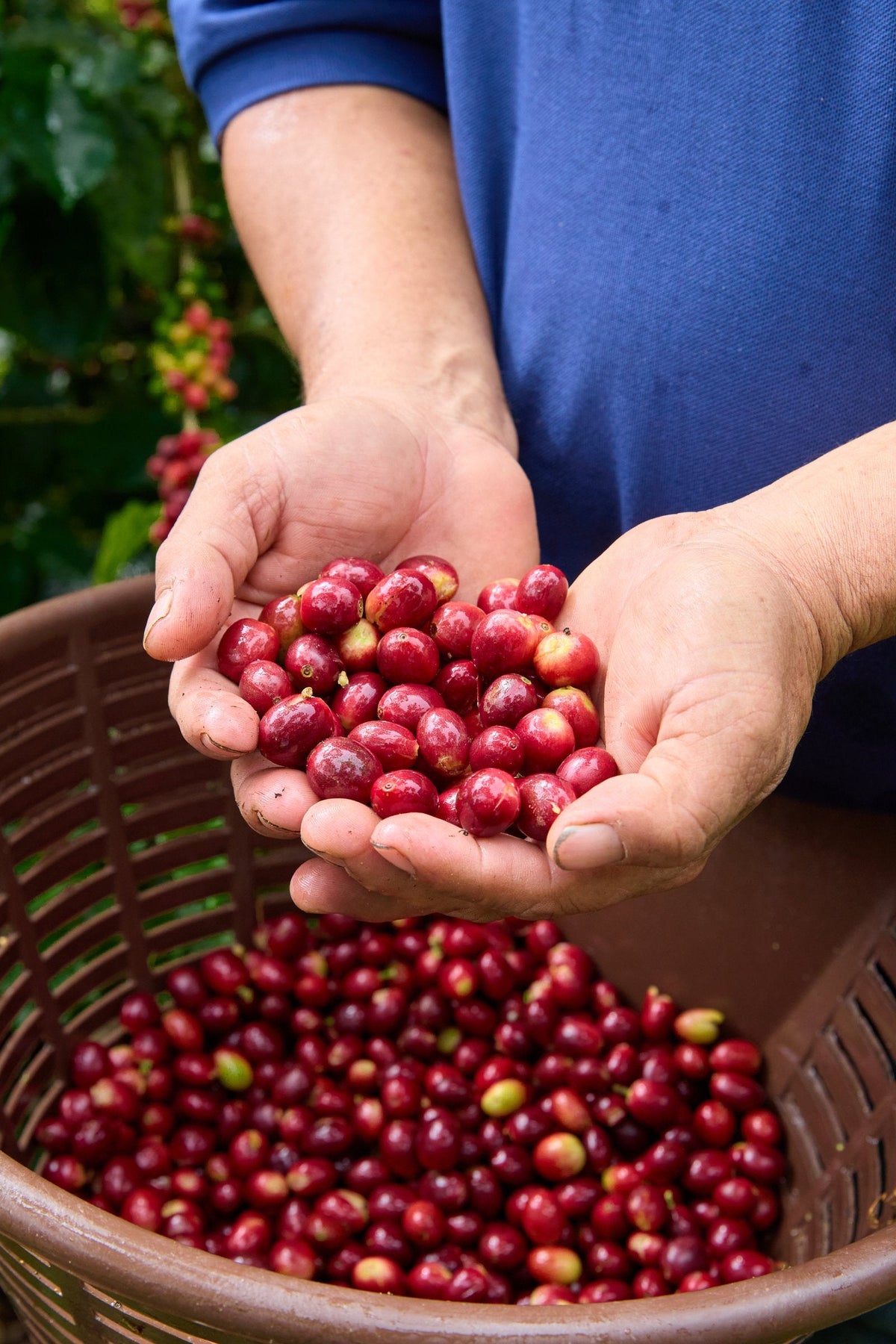
Every bag of Knights Coffee starts long before the roast — on a farm, with a family.
Our coffee is grown by Catholic farming families in the highlands of Matagalpa, Nicaragua. The first of those families — our founding smallholder partnership, begun in 2018 — is Rolyn and Lorena Garcia.
Before the Partnership
For years, the Garcias sold their harvest the way most small farmers in the region have to: at whatever price the commodity exchange set that day.
That price has nothing to do with what it actually costs to raise a crop and a family on the same land. It swings with markets an ocean away, set by people who will never walk their rows or meet their children. A family can do everything right — tend the plants, pick at the right moment, sort with care — and still come up short, simply because a number moved in a trading room they'll never see.
That was the Garcias' reality before 2018: good coffee, honest work, and a price that answered to neither.

A Fair Price Changes the Math
The partnership changed one thing, and that one thing changed everything downstream: the Garcias' coffee is bought directly, at a fair price above the commodity market.
No exchange setting the number. No chain of middlemen taking a cut at every step. Just a price that reflects what the harvest is actually worth and what it costs a family to produce it well.
That is not charity. It is arithmetic. When a farming family is paid fairly, they can plan. They can invest in their land instead of mining it. They can keep the farm — and keep their children on it — rather than losing both to a bad year and a worse price.
What a Fair Price Has Built
Here is what that fair price has built so far, one harvest at a time:
- A completed house for the family — built from coffee income, on their own land.
- A bed-for-the-bedless program for their neighbors — because the Garcias know exactly who in their village is sleeping without one.
- A literacy program — coffee funding the ability to read, for the family and the community around them.
- A chicken coop — food security that doesn't depend on a market price.
Read that list again. A house. Beds for neighbors. Books and reading. Food on the table. None of it is abstract. All of it traces back to a simple decision: pay the family what their coffee is worth.

The First Family, Not the Only One
Rolyn and Lorena were the first, but they are not the only ones. Today, Knights Coffee's beans come from farming families like theirs in the Matagalpa highlands — including land owned by the Diocese of Matagalpa itself, where the revenue from the crops goes back into the Church's local apostolic works, community programs, and dignified wages for the people who farm it.
Different farms, same principle: families who keep their land, do dignified work, and get paid what their harvest is worth.
Why We Tell You Their Names
Most coffee is anonymous. A region, maybe. A score, sometimes. Never a family.
We think the names matter. When you know the coffee in your cup comes from Rolyn and Lorena Garcia — from their rows, their harvest, their house that coffee built — the cup means something different. It stops being a commodity and becomes what it actually is: the fruit of a family's work, bought fairly, roasted in small batches, and bagged within hours of roasting.
And it doesn't end there. Every bag of Knights Coffee sends its net profits to seminarians in need — so the same purchase that pays a farming family fairly in Nicaragua also helps form a priest here at home.
Taste what a fair price builds. Shop the roasts the Garcias' harvest makes possible — build your own bundle and subscribe to keep it coming.
Every bag of Knights Coffee sends its net profits to seminarians in need.
